
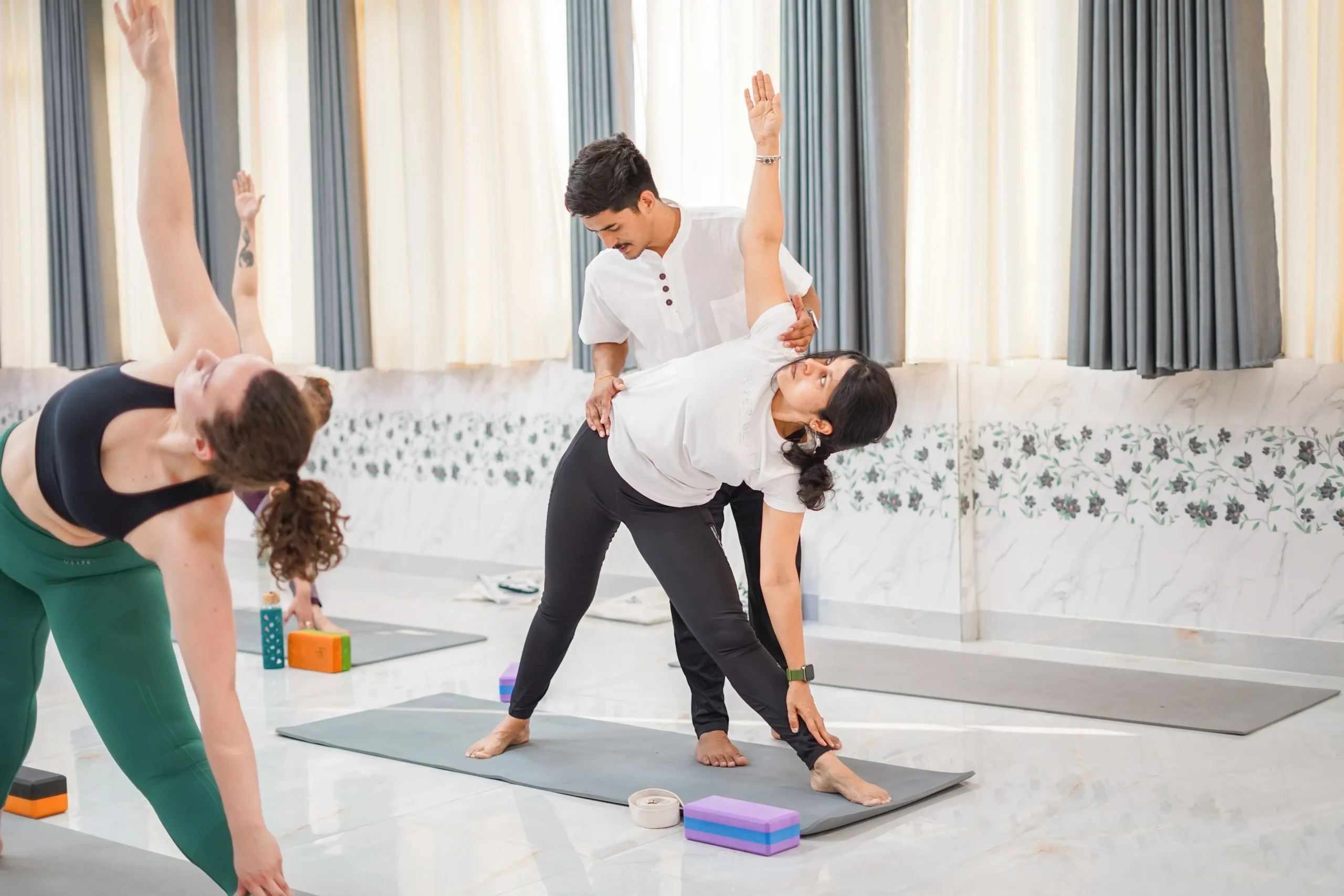

Choosing a Vinyasa Yoga Teacher Training in Rishikesh is a serious decision. Teaching yoga is not about mastering advanced postures; it is about understanding how to guide others safely and responsibly.
A strong teacher training program goes beyond choreography. It helps students develop clarity in teaching, confidence in communication, and respect for the individuality of every body.
What Makes a Quality Vinyasa Teacher Training?
A reliable training program includes more than daily asana practice. It integrates both traditional and modern knowledge so future teachers can adapt yoga to real people, not idealized bodies.
Key components of a meaningful training include:
- Yogic philosophy and classical texts
- Functional anatomy and physiology
- Safe alignment and injury prevention
- Pranayama and meditation
- Teaching methodology and sequencing
This foundation ensures that graduates are prepared to teach sustainably, not just energetically.
Alignment-Focused and Mindful Teaching
In Vinyasa yoga, transitions are as important as postures. Without proper alignment and awareness, flowing sequences can lead to strain or long-term injury. A responsible training emphasizes:
- Clear verbal cues
- Thoughtful sequencing
- Modifications for different body types
- Awareness over force
This approach allows teachers to support beginners while helping experienced practitioners refine their understanding.
Learning as a Lifelong Process
Yoga education does not end with certification. The most effective teachers remain students—continuing daily practice, self-study (svādhyāya), and learning from experienced guides. A strong Vinyasa yoga teacher training in Rishikesh encourages humility, patience, and continuous growth.